



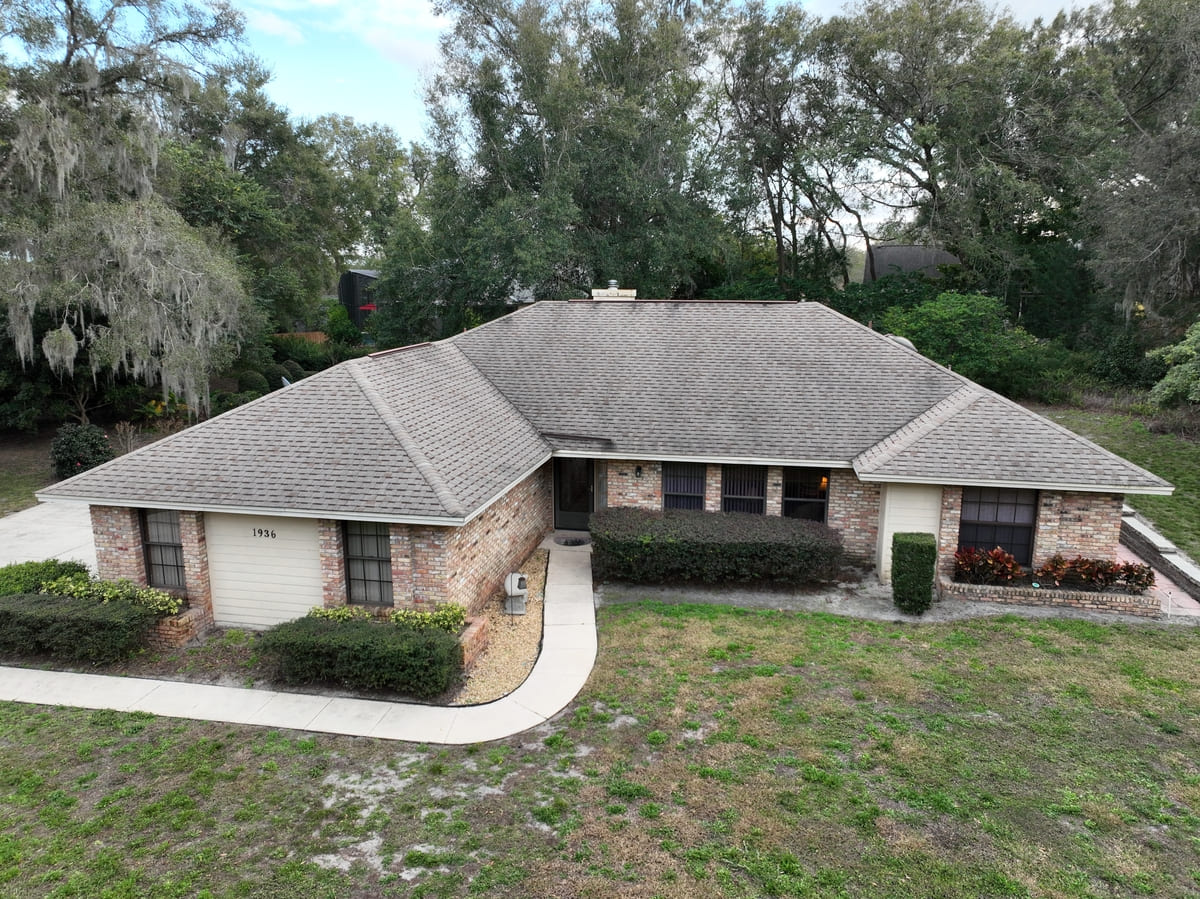

Hip-and-valley roofs require careful handling due to their intersecting slopes, large surface areas, and the way water naturally collects at low points. The home shown in the attached images is a classic brick Florida property with an extended hip-and-valley roofline, surrounded by mature landscaping and shade-heavy foliage. The project involved a full replacement of the aging roofing system and the installation of a modern, durable asphalt shingle roof built to withstand Apopka’s hot sun, heavy rains, and seasonal storm patterns. Many homeowners choose established roofing professionals like DeSantis Roofing Inc. to ensure complex roof structures receive proper attention and long-lasting results.
A Roof Structure That Requires Precision
The images clearly show a large hip-and-valley roof with several connecting faces, a covered entry section, and an attached garage under its own hip structure. Roofs like these are known for:
- Multiple directional slopes
- Valley channels where water travels rapidly
- Broader surface areas exposed to rain and heat
- Structural joints that require consistent coverage
This type of roof doesn’t have simple straight runs—each section must tie into the next cleanly. Ensuring proper alignment across the entire structure is essential for long-term performance.
Even at a glance, the home’s roofing layout makes it clear that uneven installation or poor material transitions could lead to water flow issues, premature wear, or structural weakness. That’s why a full replacement must be approached with accuracy and strong roofing practices.
Tear-Off Reveals the True Condition of the Roof
The drone images show the property during different phases of roof removal. As the old shingles were removed, the existing roof deck became visible. Some areas show original decking intact, while other sections were replaced with new plywood where deterioration occurred.
This is a common scenario on older Florida roofs. Factors that typically contribute to deck deterioration include:
- Prolonged moisture exposure
- Heat expansion affecting older materials
- Prior repairs that did not fully protect the decking
- Natural aging of wood panels
Replacing damaged decking sections strengthens the roof structure and prepares it for modern materials designed specifically for Florida’s climate.
Weatherproofing Installed Across the Entire Roof Surface
Once the roof was stripped down and repaired, the next major visual stage shown in the photos is the installation of full-coverage synthetic underlayment. This material is an essential part of modern roofing systems because it:
- Enhances moisture resistance
- Helps shield decking from Florida humidity
- Provides improved tear strength compared to older felt materials
- Offers better UV durability during installation
- Creates a uniform base layer for asphalt shingles
In the images, the underlayment covers nearly the entire roof surface, including valleys and transitional areas. A continuous moisture barrier like this reduces leak risk and protects the decking from wind-driven rain—especially important for homes surrounded by trees, where branches and debris may occasionally impact the roof.
Delivery of New Shingles and Materials to the Rooftop
The photos also show multiple bundles of shingles staged neatly on the roof. Roofers typically position materials this way to:
- Reduce installation time
- Ensure even distribution of weight
- Keep the work area organized
- Allow shingle application to proceed smoothly
This home’s rooftop staging shows a well-organized preparation for final installation. Because hip-and-valley roofs involve many directional changes, access to shingles across the surface helps maintain consistency throughout the installation process.
The Completed Roof Adds Strength and Curb Appeal
The final drone photo reveals the finished roof—a uniform, clean, and visually balanced installation that matches the architecture of the brick home. The new shingles give the house a renewed appearance without altering its original character.
Key benefits of the finished roofing system include:
- A fresh, modern shingle color that complements the brick exterior
- Stronger sealing along all hips and valleys
- Improved water flow due to consistent material alignment
- Increased resistance to heat, storms, and humidity
- Better curb appeal for long-term home value
Because the roof covers such a large portion of the home’s visual identity, replacing it brings an immediate improvement to the entire property.
Why Hip-and-Valley Roofs Require Skilled Installation
Roofing complexity varies from home to home, but hip-and-valley designs present unique challenges that require an experienced contractor. This roof type demands:
- Precise shingle cutting and alignment in valleys
- Careful attention to intersections and transitions
- Strong fastening patterns that resist uplift
- Proper sealing where multiple angles meet
- Material consistency across connected roof planes
A home surrounded by trees, like this one, also needs additional considerations. Shade, moisture retention, and organic debris can all accelerate roof wear if not properly accounted for. A well-installed roofing system helps protect against these elements.
Homeowners benefit from partnering with reliable local roofing experts like DeSantis Roofing Inc., especially when dealing with roofs that require advanced skill and attention to detail. For professional assistance or questions about a roofing project, call 321-501-6220.