321-501-6220


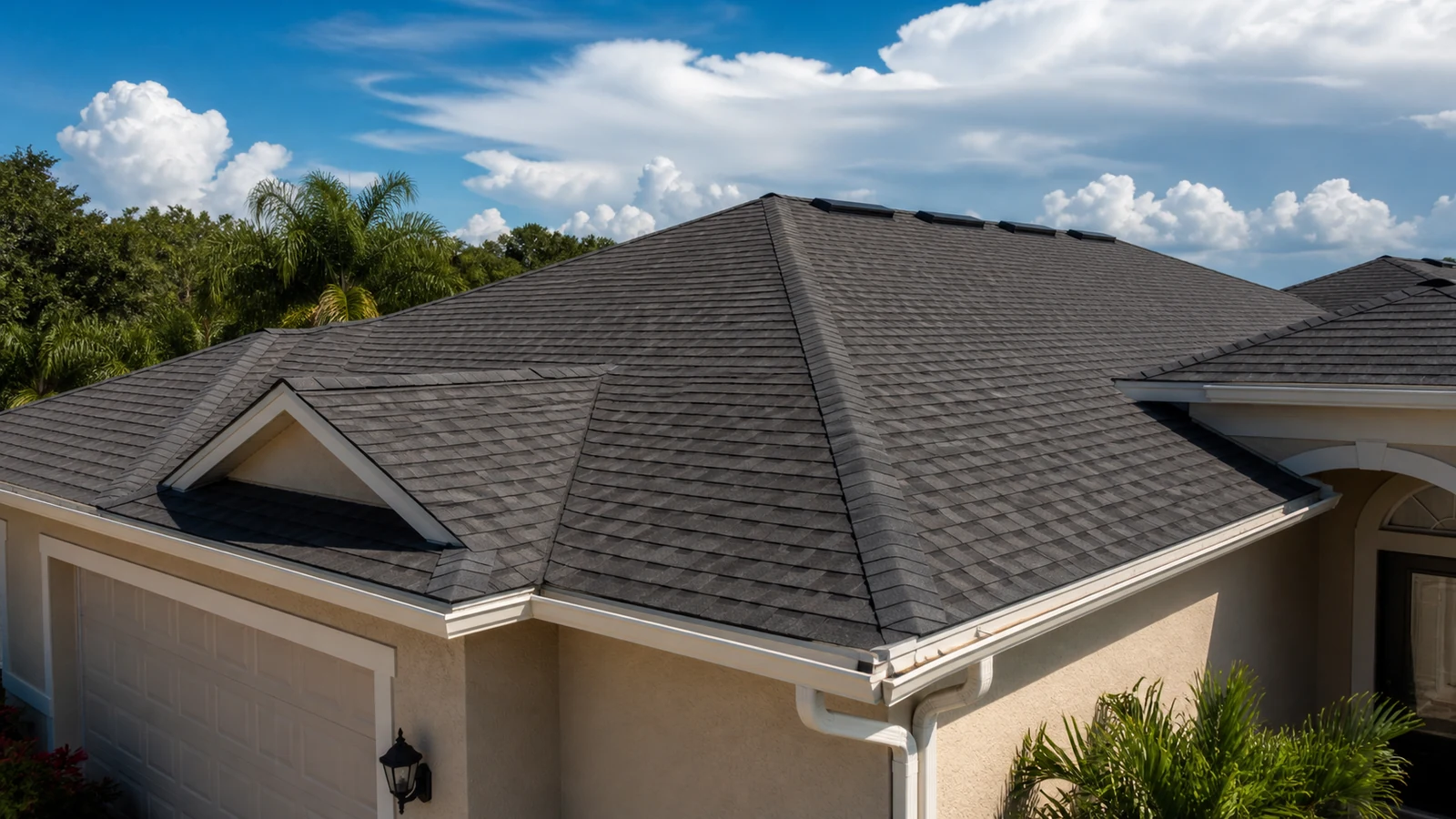
There is no dependable age that applies to every Florida roof. Material is only one factor. Installation, roof design, sun and moisture exposure, wind events, ventilation, drainage, maintenance, prior repairs, and the condition of the deck all influence how a roof ages. A manufacturer’s product information can describe intended use and warranty terms, but it cannot predict the remaining life of a particular roof.
Use age as a planning clue, not a replacement deadline. The better question is: what condition is the roof in now, and what does a current inspection show?
Why Florida Roofs Do Not Age on One Schedule
Two neighboring roofs installed in the same year can age differently. One may receive intense afternoon sun, collect leaves in a valley, or face stronger wind exposure. The other may have simpler geometry, balanced drainage, and fewer penetrations. Installation details and repair history can widen that difference.
Florida adds recurring heat, ultraviolet exposure, heavy rain, humidity, tropical weather, and wind-driven debris. Those conditions do not create a universal “Florida lifespan,” but they make current condition and water-shedding details especially important.
Roof age still belongs in your records. It helps frame maintenance, inspection, insurance, and replacement-planning conversations. Just do not let a birthday replace an evaluation.
Material Matters, but a Range Is Not a Promise
Asphalt shingles, tile, metal, and low-slope membranes age in different ways and require different details. Manufacturers publish product specifications, installation instructions, and warranty documents. Those sources are more useful than an unsourced internet chart, yet their terms still depend on the exact product and conditions.
Asphalt shingles
Shingle condition may be affected by granule loss, cracking, lifted edges, impact, fastening, ventilation, flashing, and repairs. A product line’s warranty period is not a forecast that every installed roof will remain serviceable for that number of years.
Tile
Concrete or clay tiles can remain visually intact while underlayment, flashing, fasteners, battens, or individual tiles need attention. Walking on tile can break it, so inspection should be handled by someone familiar with the system.
Metal
Panel profile, seam or fastener design, coating, trims, penetrations, substrate, and installation all matter. Exposed-fastener and standing-seam systems should not be grouped into one generic service-life claim.
Low-slope systems
Membranes such as TPO or modified bitumen depend on seams, flashings, penetrations, drainage, attachment, substrate, and rooftop traffic. Ponding or blocked drainage can change the maintenance conversation even when the field membrane looks uniform from a distance.
For a homeowner-focused comparison of shingles, tile, metal, and low-slope systems, read Best Roofing Materials for Florida Homes.
Seven Factors That Influence Roof Service Life
1. Installation quality
Correct fastening, flashing, transitions, ventilation details, and manufacturer-compatible components help a roof function as intended. A roof can age prematurely when critical details are missing or incompatible.
2. Roof shape and slope
Valleys, dormers, walls, chimneys, skylights, and mixed-slope sections create more transitions than a simple roof. Low-slope areas need systems suited to their drainage and geometry.
3. Sun, heat, and moisture exposure
Orientation and shade change how roof areas experience sun and drying. Trapped moisture, persistent dampness, or poor drainage can affect components below the visible surface.
4. Ventilation and attic conditions
Attic ventilation is part of a larger building system. Blocked intake, incompatible exhaust, air leakage, insulation, and moisture sources can influence attic conditions. A vent product should be selected from an evaluation, not added as a universal cure.
5. Storms and debris
High wind, hail, falling branches, and wind-driven debris can create new conditions at any roof age. After severe weather, compare the property with earlier photos and arrange an inspection if you see a change.
6. Drainage and maintenance
Gutters, valleys, scuppers, and drains need a clear path for water. Leaves and debris can hold moisture or redirect runoff. Maintenance also includes checking sealants, flashings, rooftop equipment, and prior repairs where appropriate.
7. Changes made after installation
Solar equipment, antennas, HVAC work, new penetrations, tree contact, pressure washing, and foot traffic can affect a roof. Keep records of anyone who accesses or alters the system.
Signs That Age May Be Turning Into a Condition Problem
Age alone does not prove failure, but age plus changing conditions deserves attention. From the ground and indoors, watch for:
- Repeated leaks or stains in more than one area
- Missing, cracked, shifted, or lifted roofing
- Loose or deteriorated flashing
- Increasing granule accumulation from shingles
- Broken or displaced tile
- Corrosion, open seams, or fastener concerns on metal roofing
- Ponding, open seams, blisters, or damaged flashing on low-slope areas
- Soft, stained, or deteriorated decking found during professional evaluation
- Repairs that keep failing or cannot integrate with surrounding material
- Interior moisture, peeling paint, or damp insulation
These signs do not automatically mean replacement. Some are repairable. Their pattern, severity, location, and relationship to the rest of the roof matter.
Inspection Is More Useful Than Guessing Remaining Years
A professional roof inspection should describe current conditions, not simply assign a lifespan from the installation date. Ask what areas were examined, which limitations applied, and whether photographs support the findings.
A useful condition review may include roof coverings, edges, valleys, flashings, penetrations, drainage, visible ventilation components, accessible attic areas, and interior signs related to the concern. The exact scope depends on the building and inspection service.
Ask for clear distinctions among:
- Items that need prompt repair
- Items that should be monitored
- Maintenance that may reduce avoidable problems
- Concealed conditions that cannot be confirmed visually
- Reasons replacement is or is not being discussed
DeSantis Roofing’s roof inspection services page explains how to request a property-specific evaluation.
Repair, Monitor, or Plan for Replacement?
A limited flashing issue, damaged component, or isolated section may support repair when the surrounding roof can accept it. Monitoring may be reasonable when a condition is stable and the inspector identifies no active failure, provided the homeowner understands what to watch.
Replacement enters the conversation when deterioration is widespread, leaks recur in multiple areas, repairs cannot be integrated reliably, materials are no longer serviceable, or the supporting deck and transitions require broader access. The decision should connect findings to a written scope.
Our roof repair versus replacement guide walks through that choice. For transactional help, use roof repair services or roof replacement services based on the evaluated need.
Build a Roof Record Before You Need It
Good records make aging easier to evaluate. Keep:
- Installation contract and completion documentation
- Permit and inspection records available from the jurisdiction
- Manufacturer, product line, and color information
- Written warranty documents and registration confirmation, if applicable
- Repair invoices and before/after photos
- Inspection reports
- Dates of severe storms or fallen debris
- Records of solar, HVAC, antenna, or other rooftop work
- Baseline exterior and attic photos
If you buy a home without these records, ask the seller for them and check public permit information where available. A roof’s apparent age or a real-estate listing is not a substitute for documentation.
A Practical Planning Timeline
Instead of counting down to an online lifespan number, use condition-based triggers.
| Situation | Planning action |
|---|---|
| Recently installed roof | Organize product, permit, warranty, and baseline photo records |
| Roof with no current concerns | Follow a sensible inspection and maintenance plan for the property |
| After severe weather | Make safe observations and inspect when changes or water appear |
| New isolated concern | Document it and request evaluation before it spreads |
| Repeated repairs or widespread aging | Compare repair feasibility with a replacement scope |
| Buying or selling | Obtain current condition information and available permit history |
This approach avoids two mistakes: replacing a serviceable roof only because it reached a generic age, and delaying evaluation because an internet chart says years should remain.
Budget planning can begin before replacement is necessary. Keep current measurements and condition notes, learn which roof sections use different materials, and review likely scope questions without selecting a product prematurely. Planning ahead gives you time to compare written proposals on equal terms instead of making every decision while a leak is active.
The same principle applies after a repair. Record what area was opened, which components were replaced, and how the completed work was documented. A future inspector can use that history to separate an old concern from a new one. Without it, homeowners may be left comparing stains, patches, and approximate dates from memory. A short, organized roof file is one of the simplest planning tools available.
Questions to Ask About an Older Roof
- What is the documented installation date?
- Which product and roof system were installed?
- What repairs or modifications have occurred?
- Are there recurring leaks or multiple problem areas?
- What condition are the flashings, drainage paths, and penetrations in?
- Can a repair integrate with the surrounding material?
- What cannot be known until materials are removed?
- What should be monitored, and how often?
- If replacement is proposed, which findings support it?
The answers should be specific to the property. Avoid anyone who guarantees a fixed remaining life without explaining the roof’s current condition.
Plan From the Roof You Have, Not a Countdown
The useful outcome is not an exact number of years. It is knowing what you have, what condition it is in, what needs attention now, and which decisions may be coming next. DeSantis Roofing can inspect the roof and explain the findings in the context of repair or replacement planning.
Frequently Asked Questions
How many years does a roof last in Florida?
There is no single reliable number. Material, installation, design, exposure, drainage, ventilation, maintenance, storms, and repairs all affect service life. Use documented age and a current inspection together.
Does a manufacturer warranty equal roof lifespan?
No. A warranty is a written contract with terms, exclusions, and eligibility requirements. It is not a prediction that every roof will remain serviceable for the full warranty period.
Does an old roof automatically need replacement?
No. Age is a planning factor, not proof of failure. Current condition, repair history, material compatibility, and the extent of any deterioration should guide the discussion.
Can maintenance make a roof last longer?
Maintenance can address debris, drainage, sealant, flashing, and small repair needs before they grow, but it cannot reverse widespread deterioration or guarantee a lifespan.
How often should a Florida roof be inspected?
The right interval depends on the roof, its records, current conditions, and recent weather. Arrange prompt evaluation after visible changes, active leaks, or significant storms rather than waiting for a calendar date.
What records show how old my roof is?
Installation contracts, paid invoices, permit records, inspection records, product documents, and dated photographs can help. Keep more than one source when possible.
Should I replace my roof before selling my home?
Not automatically. Obtain current condition information and discuss the findings with the relevant real-estate and insurance professionals. The right choice depends on the property and transaction.