321-501-6220


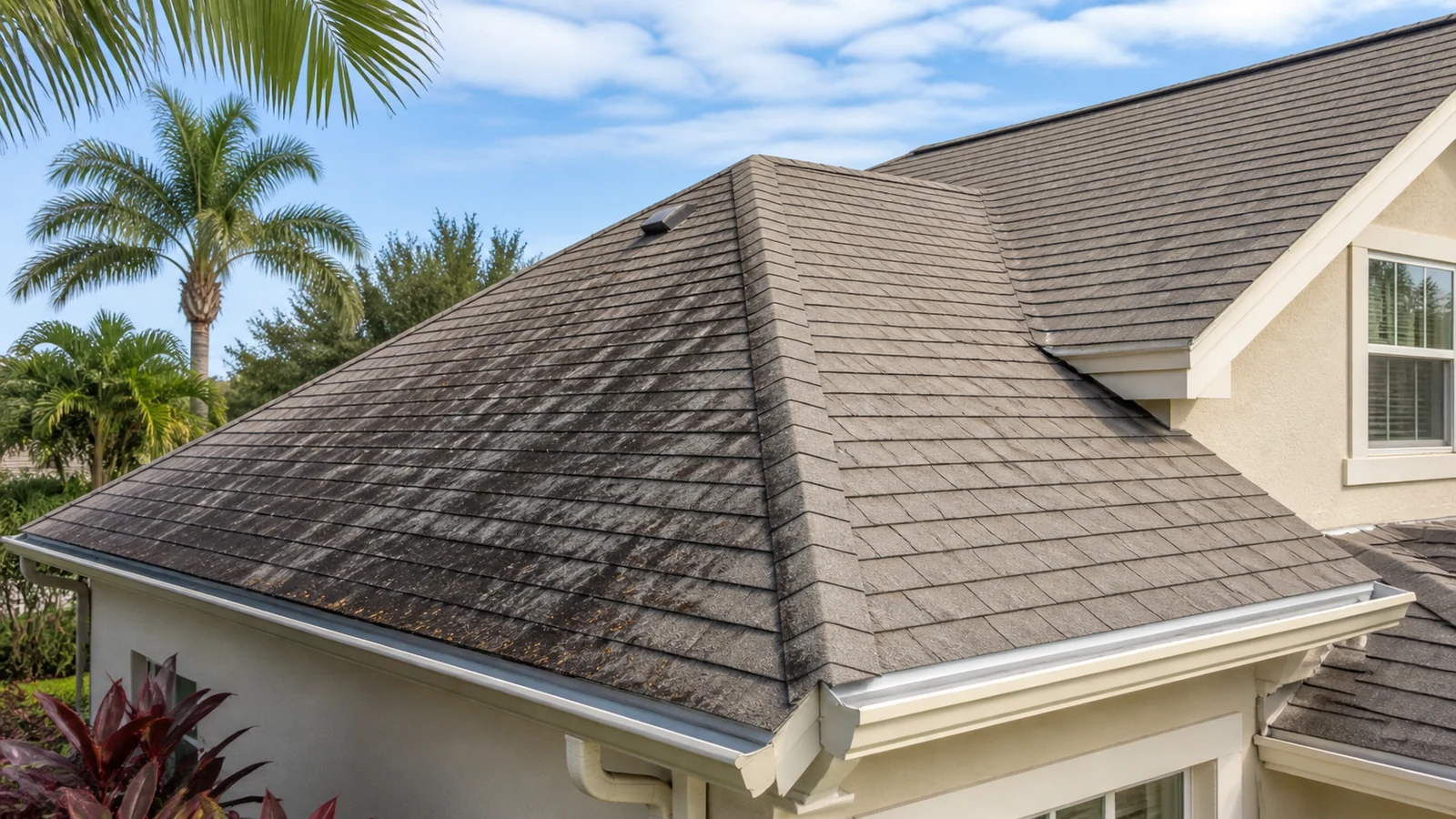
Brown or black roof streaks in Florida may come from algae, dirt, soot, tree debris, moss, or another surface condition. A photo cannot confirm which one you have or whether the roof needs cleaning or repair. Document the location from the ground, identify the roofing material, and check the manufacturer’s care instructions before anyone applies a chemical, coating, or high-pressure wash.
Treat an appearance concern and a roof-performance concern as separate questions. Discoloration alone does not prove a leak, and cleaning does not correct cracked roofing, loose flashing, blocked drainage, or moisture entering the home.
Describe the Stain Before Trying to Name It
Start with details you can observe safely:
- Is the color black, brown, green, gray, or white?
- Does it appear as long streaks, small spots, or a thick patch?
- Is it spread across a roof plane or gathered below a tree or metal feature?
- Has it changed over weeks or months?
- Do you see shifted roofing, cracked tiles, loose edges, or clogged drainage nearby?
- Is there any interior stain, damp material, or musty odor?
Take one wide photo to show the roof area and one closer image with camera zoom. Repeat the same view later if you want to track change. Stay off the roof; wet growth and cleaning solutions can make roofing slippery, and foot traffic can crack tile or disturb other materials.
Algae, Moss, Dirt, and “Roof Mold” Are Different Questions
Homeowners often use “mold” as a general name for any dark or green roof growth. The Asphalt Roofing Manufacturers Association notes that algae discoloration on asphalt roofs often appears brown to black and may be mistaken for fungus, soot, dirt, moss, or tree droppings.
Moss and other raised growth look different from flat streaking, but a distant photo still may not identify the condition or material underneath. Tree debris can also trap moisture and leave stains after it is removed.
A roofer or material-care professional should identify the roof covering, inspect the affected area, and check for a separate defect before recommending treatment. Ask whether the concern is surface discoloration, living growth, roof damage, or a combination.
Warm, Humid Conditions Can Support Algae Discoloration
ARMA reports that algae discoloration occurs in many regions and is common where conditions are warm and humid. Florida roofs can show streaking on shingles and other roof coverings, with the contrast easier to notice on lighter colors.
Surrounding conditions also matter. Shade, tree cover, roof orientation, debris, and drainage can affect how long a roof area stays damp. Those observations can help explain where staining appears, but they do not prove the cause from the ground.
Ask whether branches should be trimmed, gutters or valleys need safe debris removal, or drainage needs attention. A cleaning treatment will not solve a branch rubbing the roof or water collecting where it should drain.
Dark Streaks Do Not Automatically Mean the Roof Is Leaking
Surface discoloration may be cosmetic. A leak involves a water path through or around the roof system. The two can occur together, but surface color alone cannot confirm water entry.
Check ceilings and accessible attic areas for new staining or dampness only where you can enter safely. Note whether moisture appears during rain or in dry weather. Plumbing, HVAC equipment, windows, and condensation can also create interior symptoms.
Arrange a roof evaluation when discoloration appears beside cracked or shifted material, damaged flashing, repeated ponding, a loose penetration, or an interior moisture concern. The inspection should address both the surface and the nearby roof details.
For a broader symptom review, see Common Roofing Problems in Florida and How to Respond. If water is entering, Common Causes of Roof Leaks in Florida Homes explains why the ceiling stain may not sit below the entry point.
Cleaning Must Match the Roof Material
Asphalt shingles, tile, metal, and membrane roofs do not share one cleaning method. The roofing manufacturer’s instructions should control the product, concentration, application, rinsing, and precautions used for that material.
ARMA advises homeowners to consult the shingle manufacturer before using a cleaning chemical or method. Its algae bulletin calls for gentle application of an approved solution and warns against scrubbing because friction can loosen granules. It also notes that cleaning may provide only temporary relief and discoloration can return.
Do not accept a treatment described only as “safe for all roofs.” Ask for the roof material, proposed chemical, dilution, application pressure, rinse method, and written manufacturer guidance. Ask how the company will protect gutters, metal, painted surfaces, plants, pools, and runoff areas.
Avoid unapproved coatings or “rejuvenators” on asphalt shingles. ARMA warns that field-applied products may affect performance characteristics and may conflict with manufacturer instructions or code requirements.
Pressure Washing Can Create a New Problem
High-pressure washing can loosen shingle granules, break or displace tile, force water into laps and openings, or damage coatings and finishes. A worker also faces fall risk on a wet roof.
Ask the cleaning provider to state the application pressure and method in writing. The label “soft wash” does not define the equipment, solution, roof material, or manufacturer guidance behind the proposed work.
If someone proposes walking the roof, ask how the material will be protected and whether the manufacturer permits that access. Tile and weathered roofing may need a different approach from a new asphalt-shingle surface.
Questions to Ask Before Approving Treatment
- Which roof material and product are you treating?
- What do you believe the discoloration or growth is, and what supports that conclusion?
- Did you find any cracked, loose, or deteriorated roofing nearby?
- Which manufacturer instruction permits the proposed method?
- What chemical, concentration, pressure, and rinse process will you use?
- How will you protect plants, gutters, metals, finishes, and runoff areas?
- Will the treatment affect any written product terms?
- What result should I expect, and can the discoloration return?
A specific answer matters more than a promise that the roof will look new. Some stains may lighten without disappearing, and treatment cannot reverse material wear.
Decide Whether You Need Cleaning, Roofing Work, or Both
Cleaning may fit a surface condition when the roof material can accept the method and no repair issue is present. Roofing work may be needed when an inspection finds damaged covering, failed flashing, blocked drainage, a loose penetration, or another defect.
Ask for the cleaning and repair scopes separately. That lets you see which work addresses appearance and which work addresses the roof system. If the cause remains uncertain, start with roof inspection services before authorizing a broad treatment.
Keep dated before-and-after records along with the product and application instructions. If staining returns, those records can help the next evaluator understand what was used and how the roof responded.
DeSantis Roofing can evaluate visible roof concerns and explain whether the next step involves inspection, roof repair, or material-specific care.