321-501-6220


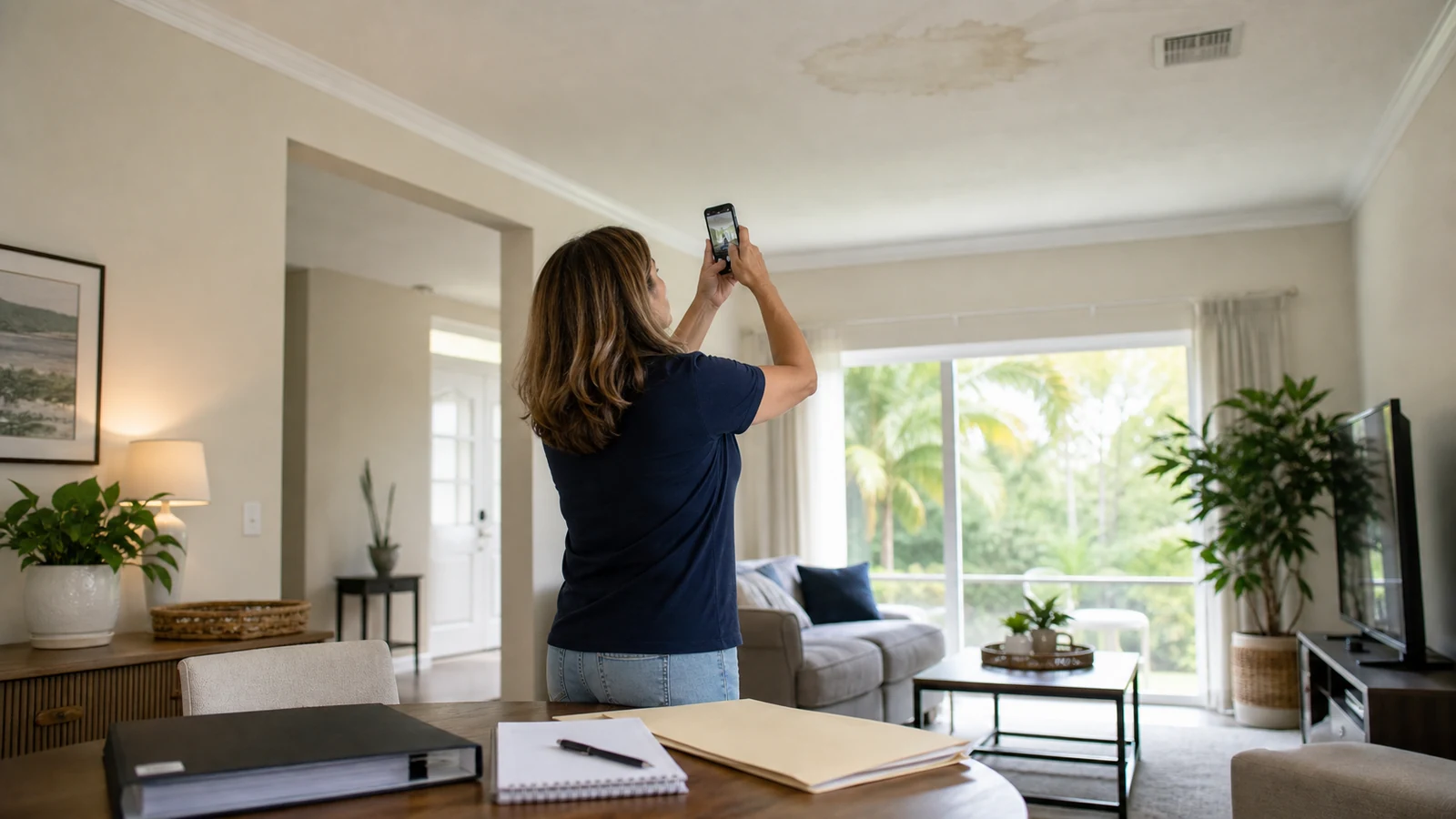
A roof insurance claim begins with your policy and the facts at your property. Address immediate hazards, document damage from a safe location, report the loss directly to your insurer or agent, and follow the instructions they provide. Keep original photos, communications, estimates, and receipts together.
A roofing contractor can inspect roof conditions and prepare a repair or replacement scope. Your insurer interprets the policy and decides coverage and payment. Keeping those roles separate makes questions easier to direct and reduces the risk of relying on promises that no contractor can make.
Handle Immediate Hazards First
Leave the area and contact the appropriate emergency service or utility if you see fire, sparking, a gas concern, a fallen power line, structural movement, or another danger to people. Keep away from a sagging ceiling, unstable tree limb, loose exterior material, and standing water near electricity.
Stay off the roof. Wet or damaged roofing can be slippery, and concealed damage may make a surface unsafe. If water is entering, move people and belongings away from the affected area when you can do so without approaching an electrical or structural hazard.
Your policy may require reasonable steps to prevent further damage. Ask the insurer what it expects and how to document temporary protection. Use qualified help for roof tarping or other work above the ground. Take photos before and after temporary work when conditions allow, and keep the receipts.
Report the Loss to Your Insurer
Contact the insurer or agent using the phone number, website, or app listed on your policy documents. Describe what you observed, where you saw it, and when you first noticed it. Avoid guessing about cause, hidden damage, or the final repair scope.
Ask for:
- The claim number
- The assigned contact information
- Instructions for photos, estimates, inventories, and receipts
- Any steps required before permanent repairs
- The policy’s notice and documentation requirements
- The expected inspection process
Write down the date, time, name, and summary of each conversation. Save emails, letters, portal messages, and uploaded files. Policy terms and current Florida requirements can affect the process, so use the insurer’s instructions and current guidance from the Florida Department of Financial Services.
Build a Clear Damage Record
Take wide photos that show the room or side of the property, then closer photos of the visible condition. Keep the original files. Record the date and approximate time, recent weather, the first sign you noticed, and any change since then.
Inside, document stains, damp material, dripping, or damaged belongings only from a safe area. Outside, use ground-level views or camera zoom. Do not lift roofing, move flashing, or climb a ladder to improve the evidence.
Create a simple list with four columns: location, observation, date noticed, and action taken. A neutral entry such as “water stain at the southeast bedroom ceiling after wind-driven rain” preserves useful facts. A statement that assigns cause without an evaluation may create confusion later.
Keep damaged items if they are safe to retain and the insurer asks you to do so. Photograph any item that must be discarded for health or safety reasons, and follow the insurer’s instructions.
Prepare for the Insurer’s Inspection
The insurer may assign an adjuster or use another inspection method. Confirm who will contact you, which areas need access, and whether the insurer wants any documents before the appointment.
Bring your timeline, photos, temporary-repair receipts, and records of earlier roof work. Point out each affected interior and exterior area. If a room, attic, or exterior section is unsafe or inaccessible, say so rather than entering it.
Ask the insurer’s representative which next steps and documents apply to the claim. Save any written estimate or explanation you receive. Questions about coverage, deductibles, exclusions, depreciation, or payment belong with the insurer or a licensed insurance professional.
Know What a Roofing Contractor Can Provide
A roofing contractor can evaluate accessible roof conditions, take measurements, identify the work being proposed, and prepare an estimate or written scope. The scope may address roofing, underlayment, decking, flashing, ventilation, drainage, removal, property protection, and cleanup when those items apply.
Ask the contractor to distinguish observed conditions from concealed areas that cannot be confirmed before removal. Photos should identify locations and support the proposed work rather than make promises about the claim.
The contractor should not interpret your policy or guarantee that the insurer will approve, pay, or replace the roof. Send policy questions to the insurer. Send roof-system and construction questions to the contractor.
For a roof condition review, see roof inspection services. If wind, hail, or falling debris prompted the concern, storm damage roofing explains the roofing evaluation without deciding the insurance result.
Compare the Roofing Scope With the Insurer’s Documents
An insurer’s estimate and a contractor’s proposal may organize work differently. Compare the roof areas, measurements, removal, materials, decking, flashing, ventilation, permits, protection, cleanup, and any item listed as an allowance or exclusion.
Highlight a difference instead of assuming which document is correct. Ask the contractor to explain the construction scope and ask the insurer how it evaluated the claim under the policy. Keep responses in writing when possible.
If removal reveals a concealed condition, photograph it and follow both the contract’s change process and the insurer’s instructions before authorizing added work. A contractor should explain the condition and proposed construction response. The insurer decides whether the claim includes that item.
Read Every Roofing Contract Before Signing
The roofing contract and the insurance claim are separate agreements. Read the scope, price, payment schedule, cancellation terms, materials, change-order process, cleanup, and written warranty documents. Keep a complete copy, including attachments.
Florida’s Department of Financial Services warns homeowners about contractors who offer gifts or promise to waive an insurance deductible in exchange for an inspection or claim-related work. The department also states that a contractor may not submit a claim directly to an insurer on the homeowner’s behalf. Review the state’s current contractor and residential property guidance before signing.
Verify the contractor’s current license through Florida’s official licensing system. Do not sign a blank form, incomplete scope, or document you have not read. Ask for an explanation of any authorization that allows another party to communicate, collect funds, or make decisions.
Keep the Claim and Project Records Together
One folder should contain:
- Policy and claim contact information
- Claim number and communication log
- Original photos and videos
- Damage inventory
- Temporary-repair records and receipts
- Roofing inspection notes and estimates
- Insurer estimates, letters, and explanations
- Signed contract and change orders
- Invoices, payment records, and closeout documents
Name files by date and subject, such as `2026-08-31-bedroom-ceiling.jpg` or `2026-09-02-roofing-estimate.pdf`. Consistent names make it easier to find the record an insurer or contractor requests.
Questions to Ask at Each Step
Ask the insurer
- Which policy provisions and duties apply to this loss?
- Which documents do you need, and how should I submit them?
- May permanent repairs begin before your inspection?
- How will you explain the coverage decision and estimate?
- Who should receive follow-up questions?
Ask the roofing contractor
- Which roof areas did you inspect?
- Which conditions did you observe?
- What work and materials does the proposal include?
- Which conditions remain concealed?
- How will added work be documented and approved?
- Which photos and completion records will I receive?
Ask yourself before signing
- Do I understand the roof scope and the payment terms?
- Are claim expectations written by the insurer rather than promised by a contractor?
- Have I kept a full copy of every document?
- Do I know who decides a change and how it will be priced?
Get Help With the Right Question
Contact your insurer for policy interpretation, claim requirements, and coverage decisions. Florida residents can also use the Department of Financial Services consumer resources when they need help understanding the process or locating the appropriate state contact.
Contact DeSantis Roofing when you need the roof condition evaluated or a written construction scope. Describe the visible change, location, date noticed, and any immediate safety issue without diagnosing the cause.