321-501-6220


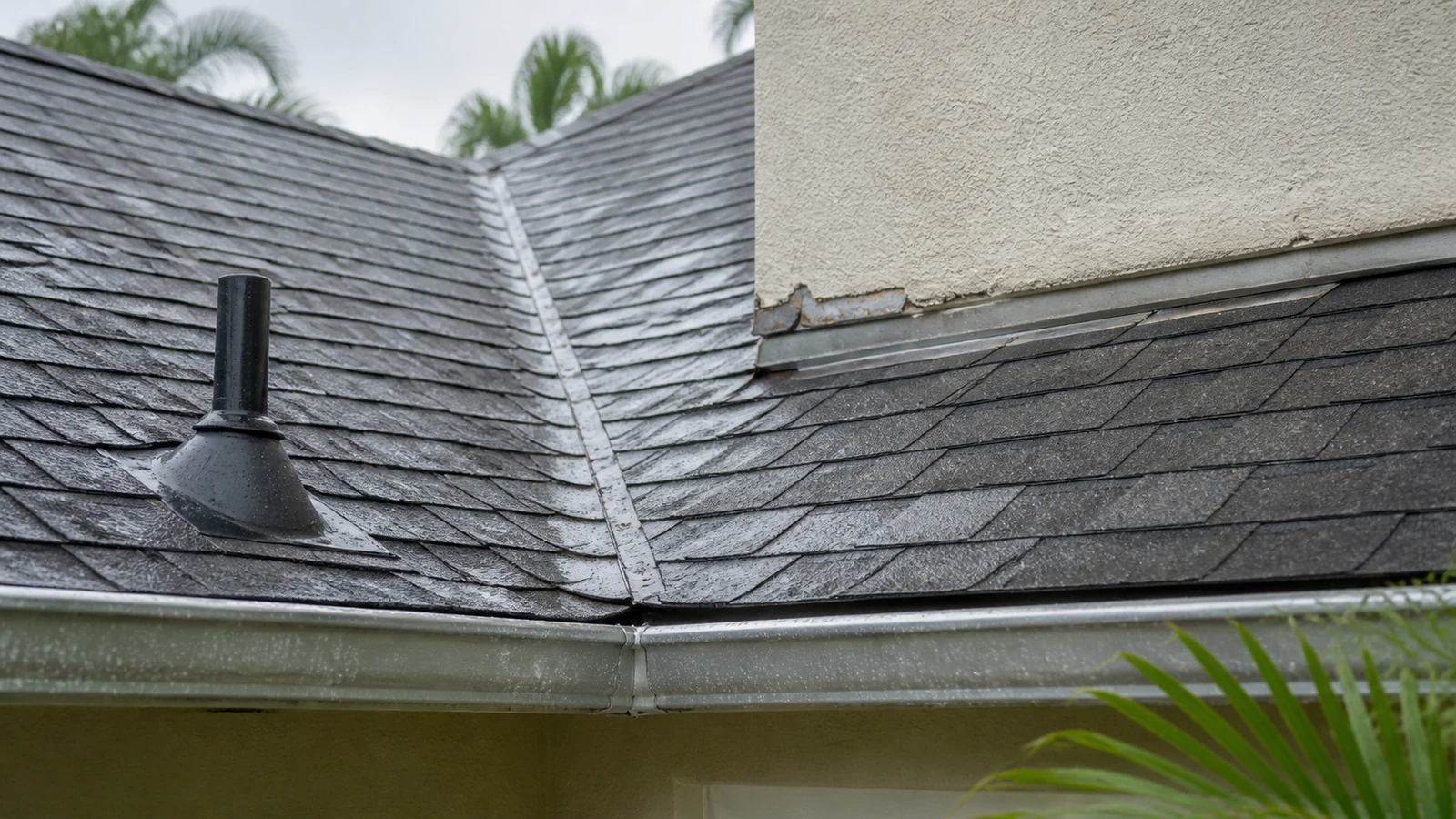
A ceiling stain does not tell you exactly where water entered. Rain can move under roofing, along decking or framing, and around pipes before it appears indoors. In Florida homes, common source areas include damaged roofing, flashing at walls and chimneys, vent boots, valleys, skylights, roof edges, clogged drainage, and transitions between steep- and low-slope sections. Condensation, plumbing, windows, and HVAC equipment can also mimic a roof leak.
Document when and where the water appears, avoid climbing onto the roof, and have the entry path traced before approving a repair.
Why the Drip May Be Far From the Entry Point
Water follows gravity, but the path is rarely a straight vertical line. It can run across underlayment, down a rafter, along a pipe, or through an older repair before reaching drywall. Wind-driven rain may push water into a transition that does not leak during a gentle shower.
That is why patching directly above a stain can miss the source. Diagnosis begins with timing, weather direction, roof geometry, and the conditions between the exterior and interior—not only the spot where a bucket sits.
If water is entering during a storm, follow the safety steps in What to Do When Your Roof Leaks During a Florida Storm. This article focuses on likely source areas after immediate safety is handled.
1. Missing, Lifted, Cracked, or Damaged Roofing
Shingles, tiles, metal panels, and low-slope membranes shed water in different ways. Wind, impact, foot traffic, aging, or incompatible prior work can leave an opening or disrupt the intended overlap.
From the ground, a homeowner may notice a missing shingle, shifted tile, uneven ridge, torn membrane edge, or loose metal trim. Do not assume every visible defect is the leak source. Water may enter at one location and show up elsewhere, and more than one condition can be present.
A repair should identify the affected material, surrounding condition, and how the new work will integrate with the existing roof.
2. Flashing at Walls, Chimneys, and Roof Intersections
Flashing directs water where a roof meets a wall, chimney, another roof plane, or a vertical surface. These transitions can leak when metal is loose, corroded, missing, poorly lapped, or separated from adjacent materials. Sealant may conceal a detail temporarily without correcting the underlying path.
Step flashing, counterflashing, headwall flashing, and valley metal are not interchangeable details. The correct repair depends on how the roof and wall assembly were built. Ask the contractor to show which flashing is involved and whether surrounding roofing must be removed to integrate the repair.
3. Plumbing Vents and Other Roof Penetrations
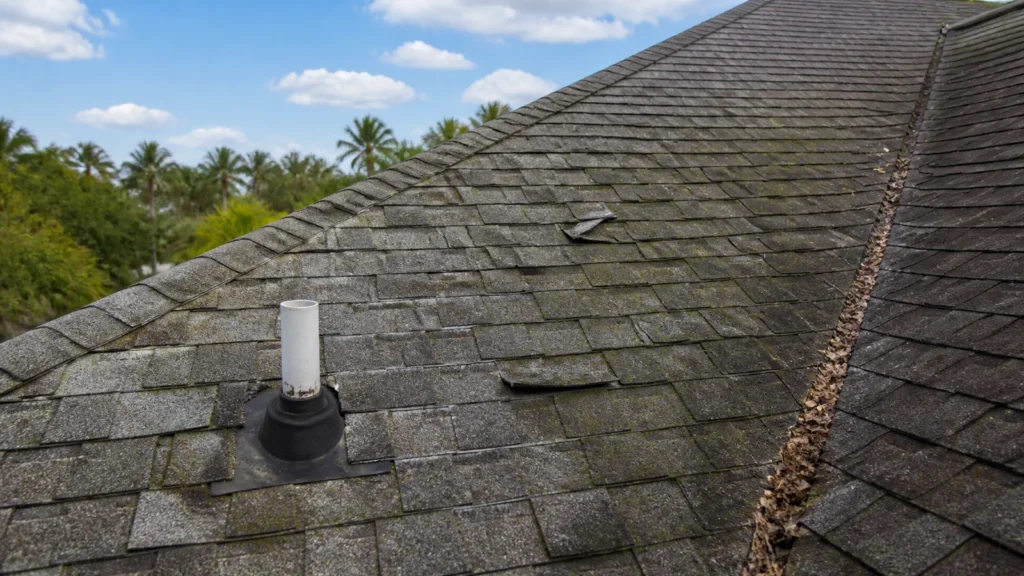
Every pipe, exhaust vent, antenna mount, skylight, or equipment curb interrupts the roof surface. Boots, collars, flashings, seals, and fasteners around those penetrations can deteriorate or be disturbed.
A cracked rubber vent boot is a familiar example, but the pipe itself, fasteners, surrounding shingles, or attic condensation may also be involved. Skylight leaks can come from flashing, the unit, condensation, or a nearby roof condition. Diagnosis should separate those possibilities before parts are replaced.
4. Valleys and Complex Roof Transitions
Valleys carry water from two roof planes and can receive a large volume during Florida downpours. Debris, damaged material, poor laps, prior patches, or an installation detail can interfere with drainage.
Homes with additions, porches, Florida rooms, or mixed roof slopes often have transitions between different systems. A steep-slope shingle section and a low-slope membrane section must be joined with details suited to both. Generic surface caulk is not a complete explanation of how that transition should shed water.
5. Gutters, Scuppers, Drains, and Ponding
Gutters do not waterproof the roof, but blocked or misdirected drainage can send water where it does not belong. Overflow may wet fascia, soffits, walls, or foundations. On low-slope roofs, clogged drains or scuppers can contribute to standing water and stress at seams or flashings.
Look from the ground for overflowing gutters, vegetation, detached sections, staining, or water spilling behind the gutter. Keep safe access in mind; cleaning a wet roof edge from a ladder is risky.
Persistent ponding needs evaluation of drainage, slope, and the roof system. Do not puncture or sweep water toward an unknown opening.
6. Roof Edges, Fascia, and Wind-Driven Rain
Drip edge, starter material, fascia, soffit, and gutter transitions help manage water at the perimeter. Wind-driven rain can test those details from directions that ordinary rainfall does not.
An interior mark near an outside wall may involve the roof edge, but it can also come from siding, windows, wall flashing, or plumbing. A roofer may need to coordinate with another trade when the evidence points beyond the roof.
7. Storm Debris and Impact
Branches and wind-blown objects can crack, puncture, displace, or abrade roofing. A branch resting on the roof may also hide the point of impact. Hail can mark roofing and soft metals, but visual marks require context and do not determine insurance coverage.
After a storm, use a ground-level checklist and compare the roof with earlier photos. Our guide on how to check for roof damage after a Florida storm explains safe documentation and next steps.
8. Aging Repairs and Incompatible Materials
Roof cement, tape, coatings, and replacement pieces sometimes remain after earlier repair attempts. A repair can fail when it relies on surface sealant, does not address water flow, uses incompatible materials, or cannot tie into the surrounding roof.
Ask what was repaired previously and whether documentation exists. The new scope should explain what old material will be removed, what condition is underneath, and how the repair will be integrated. Repeating the same patch without understanding why it failed can prolong the leak.
9. Condensation and Non-Roof Sources
Not every wet ceiling is caused by rain entering through the roof. Condensation can form on ducts, pipes, or the underside of roof components when temperature and moisture conditions allow. Plumbing supply or drain lines, HVAC equipment, sprinkler piping, windows, and walls can produce similar symptoms.
Timing helps narrow the possibilities:
- Water only during wind-driven rain may point toward a weather-facing transition.
- Water during every rain may suggest a consistent exterior path.
- Moisture during dry weather may involve plumbing, HVAC, or condensation.
- A stain below a bathroom or mechanical unit may require another trade.
These patterns are clues, not a do-it-yourself diagnosis.
How a Professional Traces a Roof Leak
The process begins with questions. When did the leak start? Which storms or wind directions make it appear? Has the area been repaired? Is the stain growing? Then the evaluator connects the interior location to roof geometry and examines plausible exterior source areas.
Depending on the property, the review may include roofing, flashings, valleys, penetrations, edges, drainage, accessible attic conditions, and moisture patterns. Controlled testing may be appropriate in some cases, but it should be planned so water is introduced carefully and other sources are considered.
A useful repair proposal identifies:
- The suspected entry area and supporting observations
- Materials that must be removed
- The component or transition to be repaired
- How the repair ties into surrounding roofing
- Concealed conditions that may change the scope
- Photos or documentation to be provided
- What is excluded from the proposal
Ask how the repaired area will be checked after the work and what documentation you will receive. Photographs of concealed conditions and completed details can help you understand the scope and preserve a useful roof history. If the source remains uncertain, the proposal should say so plainly instead of presenting a guess as a diagnosis.
Repair or Replacement?
A single leak does not automatically require replacement. A focused repair may be appropriate when the source is localized, the surrounding roof can accept the work, and the repair restores the intended water path.
Replacement may enter the discussion when problems are widespread, several areas leak, materials are extensively deteriorated, repairs cannot integrate reliably, or deck and transition conditions require broad removal. The decision should follow inspection findings rather than the urgency of the drip.
Use Roof Repair vs. Replacement in Florida to compare the decision factors. For a property-specific repair scope, see DeSantis Roofing’s roof repair services. If the source is unclear, start with roof inspection services.
What Homeowners Can Document Safely
Take a wide image of the room and a close image of the stain or damage. Note the date, rainfall intensity, wind direction if known, and how quickly moisture appeared. Mark the edge of a dry stain lightly with the date so later growth is visible.
Outside, photograph only from safe ground. Record the side of the house and visible roof area. Do not lift shingles, remove debris from the roof, apply sealant, or enter a wet attic. Save prior repair records and roof installation documents for the evaluator.
Get the Entry Path Explained Before the Repair
The best repair conversation is specific: where water is likely entering, what supports that conclusion, what will be opened or replaced, and how the detail will be rebuilt. DeSantis Roofing can evaluate the condition and prepare a written scope for the roof involved.
Frequently Asked Questions
What is the most common cause of a roof leak in Florida?
There is no single cause for every home. Common source areas include flashing, penetrations, valleys, damaged roofing, edges, and drainage. Plumbing, HVAC, walls, windows, and condensation can also mimic a roof leak.
Is the roof leak directly above the ceiling stain?
Not always. Water can travel along decking, framing, pipes, or other materials before it appears. The stain is an important clue, not a precise map of the entry point.
Can I seal a roof leak with caulk?
Surface sealant may not address the underlying water path and can complicate later repair. The affected detail and surrounding materials should be identified before a repair method is chosen.
Can clogged gutters cause water inside a home?
Overflowing or poorly directed gutters can wet fascia, soffits, walls, or foundations and may contribute to moisture problems. They are one possible source among several and should be evaluated in context.
Does one roof leak mean I need a new roof?
No. Some leaks come from a localized, repairable condition. Replacement may be considered when deterioration is widespread, failures recur, or a durable repair cannot integrate with the remaining roof.
Why does my roof leak only during heavy wind-driven rain?
Wind can push rain into edges, walls, vents, or other transitions from a direction that ordinary rainfall does not. The pattern helps guide an inspection but does not prove the source on its own.
Who should inspect a leak that may not come from the roof?
Start with the evidence. A roofing professional can evaluate roof-related paths; a plumber, HVAC technician, window specialist, or other trade may be needed when conditions point elsewhere.